
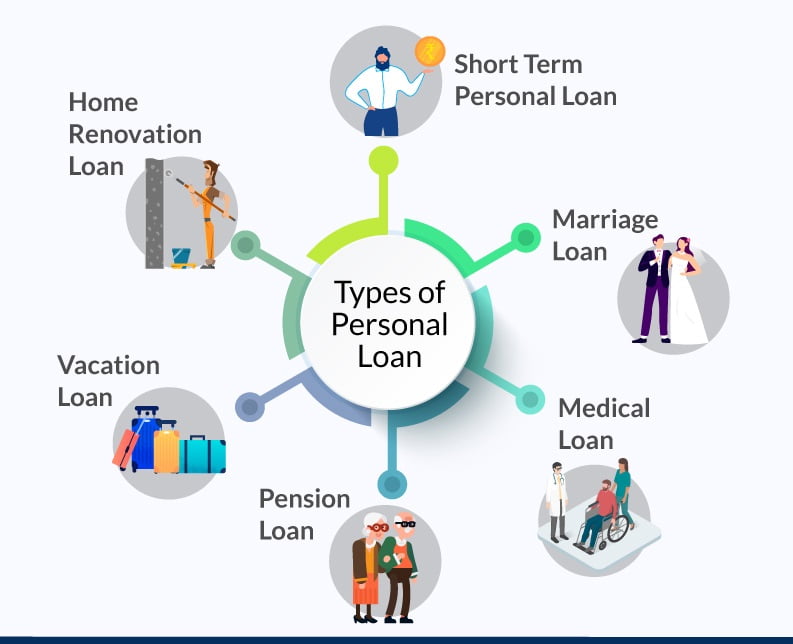
Most people think of personal loans as a last resort or something to be avoided, but that’s a mistake. If you use debt to consolidate high-interest credit card balances or to fix a roof before it collapses, you aren’t just “borrowing money”—you’re managing cash flow. Treating a loan like a failure is a mistake; treating it like a tool is just smart finance.
The problem is that the market is messy. You see an ad for a low rate and assume you’re set, only to find the fees eat your entire margin. I’ve spent enough time digging through the fine print of various lenders to know that the “best” option depends entirely on your specific credit profile and how fast you actually need the cash in your bank account.
There’s a massive divide between old-school banks and new-age fintech players. The former offers stability and a physical branch to walk into if things go sideways, while the latter offers speed and slick interfaces that make the whole process feel like ordering a pizza. Both have their place, but they serve very different kinds of people.
The Speed vs. Stability Tradeoff
When you’re in a pinch, speed is the only metric that matters. You might be staring at a mechanic’s bill or an unexpected medical expense, and you don’t have time to sit through a three-week underwriting process. This is where digital lenders live. They have streamlined data collection so much that you can often get an answer in minutes.
For instance, Discover offers online personal loans ranging from $2,500 to $40,000, which gives you a decent amount of breathing room for mid-sized projects. These companies rely on algorithms to scan your credit history and bank statements almost instantly. It’s efficient and incredibly convenient if you’re sitting on your couch at 11 PM on a Tuesday.
But speed often comes with a trade-off in how they view your risk. Some lenders are willing to look past a slightly bruised credit score if they can see a steady history of income, while others are much more rigid. You have to decide if you want the convenience of an app or the personal relationship of a local institution.
Traditional banks like Wells Fargo provide various personal loan options online, but their requirements might feel a bit more traditional. If you already have a checking account with them, they might have more data on your spending habits, which could help them offer better terms because they’ve seen your “real” financial behavior over several years.
If you want more specialized guidance or a different approach to credit, using a service like Jetzloan might provide a different perspective on your immediate needs. It’s all about finding where your specific financial profile meets the lender’s appetite for risk.
Does a lower interest rate matter more than the speed of funding when your car is sitting in a repair shop? Probably not. If you can’t get to work, a 2% difference in APR won’t help you pay your rent next month.
Then there is the middle ground. Some lenders, like OneMain Financial, try to bridge that gap by offering quick online applications while still maintaining a physical presence. They often cater to people who might not qualify for “prime” rates at the big online-only banks, providing a way to get cash even if your credit isn’t perfect.
It’s a balancing act. You’re essentially trading certainty for velocity. The faster you want the money, the more likely you are to encounter a lender that uses automated, rigid scoring models that don’t care about the “why” behind your finances.
The Credit Union Advantage and the Hidden Math
I’ve always been a believer in credit unions. They aren’t banks; they are member-owned cooperatives, and that distinction matters when things get complicated. Because they don’t have shareholders demanding quarterly profits, they can often pass those savings back to members through lower rates or more flexible terms.
Take Alliant Credit Union, for example. They offer personal loans that can be a great alternative to the big commercial lenders. Because credit unions are community-focused, they sometimes have a more nuanced approach to lending. They might be more willing to look at your total relationship with the institution rather than just a single FICO score.
However, don’t go into a credit union thinking you’ll get a “deal” every time. You still have to do the math. You need to look at the Annual Percentage Rate (APR), not just the interest rate. The APR includes the interest plus any fees they’ve tacked on, like origination fees or processing costs, which can significantly change the actual cost of your debt.
Let’s look at how these different categories generally stack up against each other in a real-world comparison:
| Lender Type | Primary Advantage | Primary Disadvantage | Best For… |
|---|---|---|---|
| Big Online Banks | Extremely fast funding | Strict credit requirements | People with great credit needing cash fast |
| Traditional Banks | Established relationships | Often slower processes | Existing bank customers |
| Credit Unions | Competitive rates | Membership often required | People seeking better long-term terms |
| Specialty/Subprime | Easier approval | Much higher interest rates | Emergency situations/Poor credit |
One thing that trips people up is “pre-qualification.” You’ll see a lot of websites offering to “check your rate without affecting your credit score.” This is usually true because they are doing a “soft pull” on your credit report. It’s a great way to shop around, but once you actually click that “apply” button, they do a “hard pull,” and your score will likely take a small, temporary hit.
If you’re planning to apply for several loans, do it all in a short window, usually two weeks. The credit scoring models are designed to see multiple inquiries in a short time as a single event, so you won’t tank your score by checking three different lenders on a Monday morning.
The math is simple but the implementation is tricky. You have to calculate the total cost of the loan over its entire lifespan, including every single fee, because a low monthly payment can actually be a trap if it means you are paying for that money for seven years instead of three.
Navigating the Rate Rollercoaster
Interest rates are not static, and they certainly aren’t always in your favor. When you’re looking at personal loan rates in June 2026, you’re looking at a snapshot of a moving target influenced by central bank policy, inflation, and general market liquidity. If you’re shopping around, you’re essentially trying to catch a wave that is constantly changing shape.
Your credit score is the primary driver of your rate, but it’s not the only one. Lenders also look at your debt-to-income ratio (DTI). If you have a high salary but 40% of your monthly income is already going toward rent and existing car loans, a lender is going to see you as a risky bet, regardless of whether your credit score is 750 or 800.
I’ve seen people get stuck in a loop of trying to “perfect” their credit before applying, only to find that by the time they are ready, the interest rates have climbed or the economic climate has shifted. There is a point of diminishing returns where waiting for a perfect score actually costs you more in higher interest rates later on.
You should also be aware of the “origination fee” trap. Some lenders will say, “Hey, we’ll give you $10,000 at 10% interest!” but then they take a $500 fee off the top. You only get $9,500 in your bank account, but you are paying interest on the full $10,000. That’s effectively an interest rate much higher than what the advertisement promised.
Always ask these specific questions before you sign anything:
- Is there a prepayment penalty if I pay this off early?
- What is the total APR, including all fees?
- Can I fix the rate, or is it a variable rate that can go up?
- How exactly is the interest calculated (daily vs. monthly)?
It’s easy to get caught up in the excitement of a large sum of money hitting your account, but that dopamine hit fades quickly, and then you’re left with the monthly obligation. Treat the application process like a business transaction, not a windfall.
Lenders like LendingClub have popularized the peer-to-peer model, which can sometimes result in different pricing structures compared to traditional banks. In this model, you’re essentially borrowing from a pool of individual investors rather than a single institution’s capital reserves. It’s a clever way to bypass some of the traditional banking overhead, but it doesn’t necessarily mean it’s cheaper for you.
Making the Choice That Actually Works
At the end of the day, a personal loan is just a tool, and like any tool, it can either build something or break something. If you use a loan to consolidate five credit cards with 24% APR into one single loan at 12% APR, you’ve won. You’ve simplified your life and saved thousands of dollars. That is a smart, strategic move.
However, if you use a personal loan to pay off your credit cards and then immediately run those credit card balances back up to their limits, you have effectively doubled your debt. You’ve just created a much larger, much more dangerous financial hole. I’ve seen this happen more times than I can count, and it’s a tragedy because it’s entirely preventable.
Before you apply, look at your budget. If you can’t afford the monthly payment comfortably with your current income, then no amount of “low interest rate” searching will save you. The math has to work in your favor every single month, not just in the first month when the lender is trying to win your business.
We recommend setting up autopay for at least the minimum amount immediately. Not only does it protect your credit score from accidental late payments, but many lenders actually offer a small interest rate discount (often around 0.25%) just for having autopay enabled. It’s free money that most people leave on the table.
Consider your timeline. If you need the money by Friday, go with the fintech or the bank where you already have an account. If you have a few weeks and want to hunt for the absolute lowest rate, go to the credit unions and the comparison sites. Speed and cost are often on opposite sides of a seesaw; you rarely get both at their maximum levels.
Review your options, check the fine print, and don’t let a slick website distract you from the actual cost of the debt.
Don’t borrow for the things you want; borrow for the things that keep your life running.
A few things readers ask
What are the different types of personal loan services available?
Common options include unsecured personal loans, which require no collateral, and secured personal loans, which are backed by assets like savings or property.
How do personal loan interest rates work?
Interest rates are typically determined by your credit score, income level, and the loan term, with higher credit scores qualifying for lower rates.
What is the difference between fixed and variable interest rates on loans?
Fixed rates remain constant throughout the loan term, providing predictable payments, while variable rates can change based on market fluctuations.
Can I use a personal loan for any purpose?
Most personal loans are versatile and can be used for debt consolidation, home improvements, medical expenses, or emergency costs.
What factors influence the approval of a personal loan?
Lenders primarily evaluate your credit score, debt-to-income ratio, and monthly income to determine your ability to repay the loan.